Posted December 18th, 2025
THe Flexiveyor is now MSHA certified!
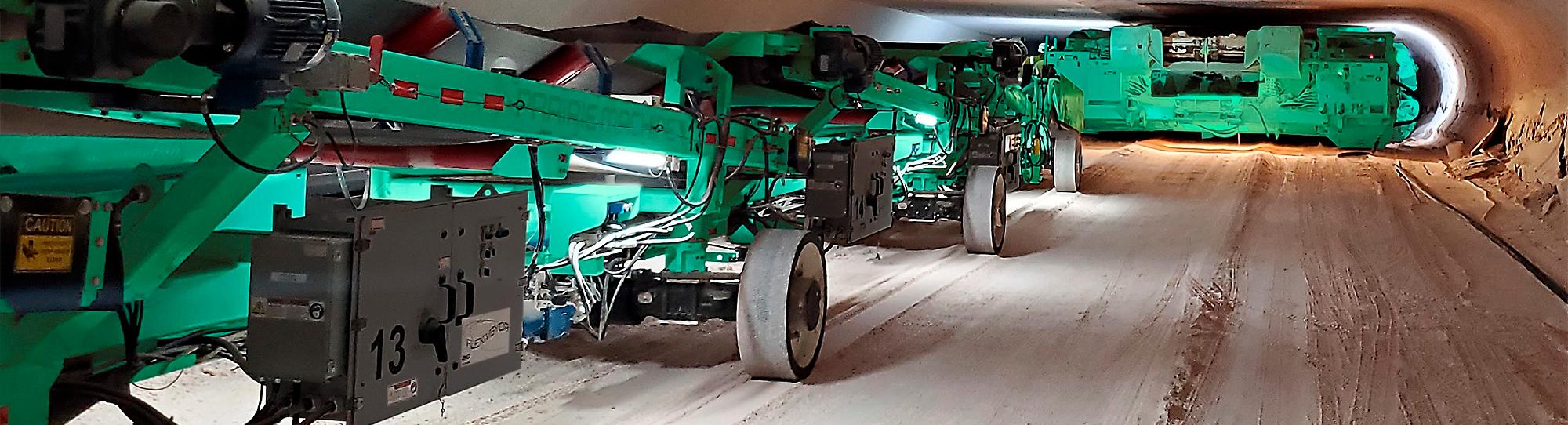
We have some big news to share with you: our Flexiveyor Continuous Haulage System is now MSHA certified! This certification underlines our commitment to providing safe, effective mining solutions expanding our footprint into the underground coal market in the USA.
What Does MSHA Certification Mean?
MSHA (the Mining Safety and Health Administration) certification is awarded by the administration’s Approval and Certification Center (A&CC). A&CC experts evaluate and test equipment, instruments, and other components to ensure that they comply with American federal regulations. Once certified, the equipment may be used in gassy environments, such as underground coal mines and other underground gassy metal and non-metal mines.
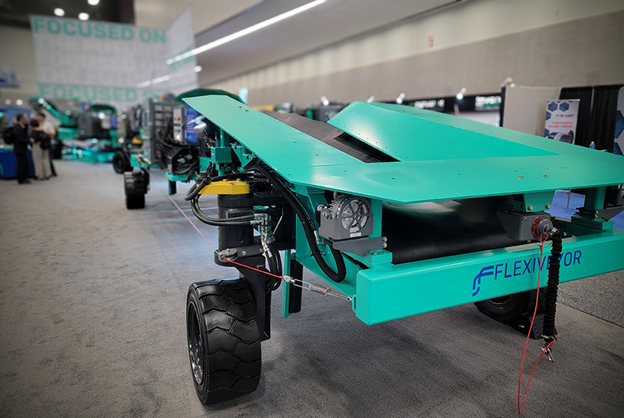
Prairie Machine first introduced the explosion proof Flexiveyor at MINExpo 2024.
Prairie Machine custom-designed and manufactured the Flexiveyor’s explosion proof (XP) electrical enclosures for MSHA approval. The XP enclosures are engineered to contain any kind of flash or explosion (caused by electrical failure of high-energy electrical components) so as not to ignite the surrounding gas.
Our MSHA-certified XP enclosures feature a slip fit cable entry gland (patent pending at the time of publication). Traditional threaded cable glands can be difficult to disassemble without damaging the cable, maintenance staff can service the slip fit cable entry glands with standard tools, in a fraction of the time. This innovative design minimizes downtime from repairs and maintenance, all while maintaining full XP integrity and compliance.
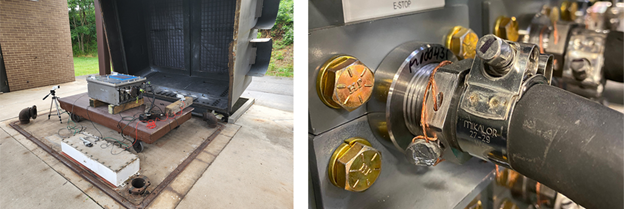
On the left, part of MSHA’s extensive testing process involves placing the enclosures in a controlled methane-in-air environment and attempting to force the surrounding air to ignite. On the right, Prairie Machine’s Innovative SLIP FIT (patent pending) Cable Entry Gland Assembly.
Why is MSHA Certification Important?
The traditional method of transporting coal from the mine face to a conveyor system is batch haulage. In this process, the mining machine discharges coal to a haulage vehicle. The haulage vehicle travels to a dump point at the end of the stationary conveyor belt and unloads the coal. Finally, the haulage vehicle returns to the mining machine, and the process repeats.
As the batch haulage vehicle travels to and from the dump site, the mining machine is inactive. Although many sites employ more than one haulage vehicle per mining machine, the nature of the batch haul process leads to considerable downtime. Over the years, mines have looked for more effective continuous haulage systems.
What advantages does continuous haulage offer over shuttle cars and other haulage methods?
Productivity. Unlike with a shuttle car, with continuous haulage, there’s no stoppage; the mining machine can cut continuously. Sites with continuous haulage regularly see a 20% - 40% increase in productivity.
Safety. Continuous haulage systems, like the Flexiveyor, can be run by as few as two operators, eliminating the need for individual shuttle car drivers and reducing the risk of collisions or crush injuries.
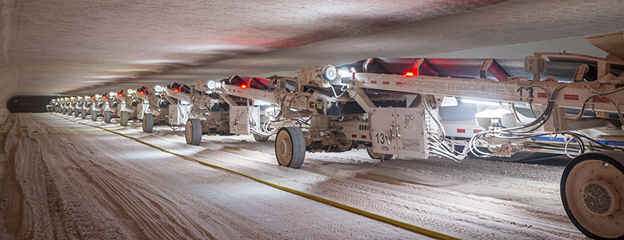
The Flexiveyor Continuous Haulage System is available in multiple configurations and is custom engineered to navigate each mine’s unique operating conditions. The low profile and narrow Flexiveyor easily integrate into mines with height and width restrictions, while the straddle-over Flexiveyor trams overtop of the stationary conveyor belt in mines with restrictive roadways.
MSHA certification is a testament to Prairie Machine’s overall commitment to providing safe, effective mining solutions, no matter the situation. We look forward to bringing our decades of experience in continuous haulage into the American coal mining sector and helping mine sites reach their full production potential.